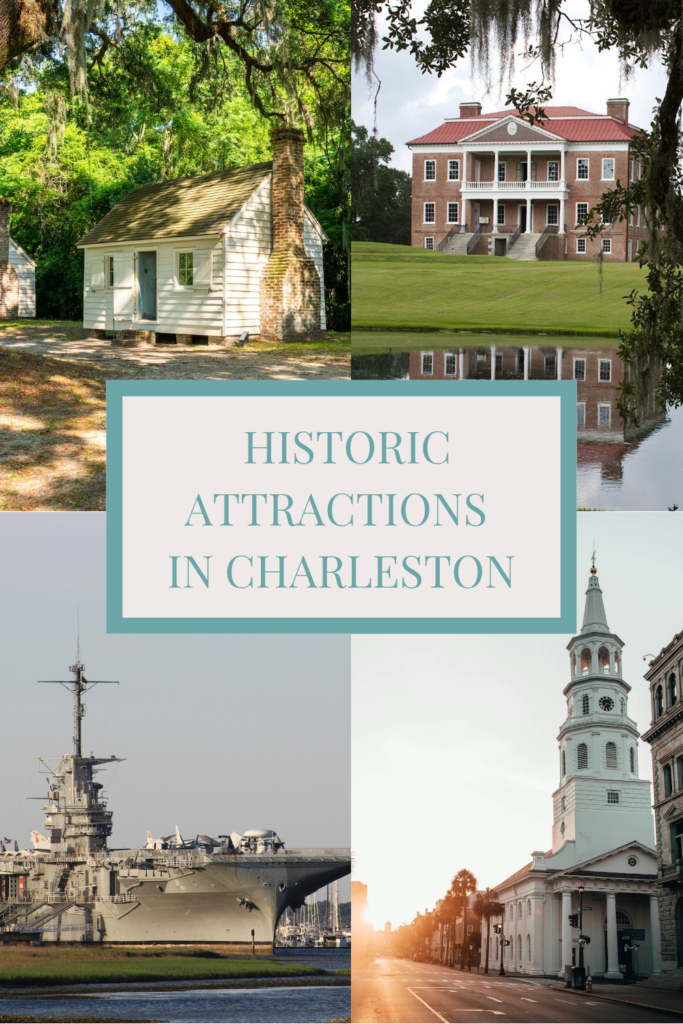
Charleston is a place where the history really defines the experience and there are countless historic sites in Charleston to explore.
It’s widely known as the site where the first shots of the American Civil War began, fired at Fort Sumter from nearby Fort Johnson. But that’s just one piece of the story. This city has layers of history that go far beyond the Civil War.
Charleston was one of the original 13 colonies, founded in 1670 as Charles Towne, and so much of that early history is still here today. The architecture, the street layout, the homes, it’s all been incredibly well preserved over the past 350+ years, which is a big part of what makes the city feel so special.
I grew up here and spent years working in the local hospitality industry, so I’ve been to these sites more times than I can count from school field trips to work events and everything in between. And I’ve seen firsthand that not every stop is right for every traveler.
When you’re planning your trip, there are so many historical sites in Charleston to choose from. From forts to house museums to gardens, there’s truly no shortage of historic places to visit in Charleston. I’m breaking down what each one is actually like so you can decide which ones are worth your time.
Thank you for your support
This article contains affiliate links. If you purchase something I’ve recommended, I’ll earn a small commission at no extra cost to you. I really appreciate your support and I hope our guides help you.
These are the top historical sites in Charleston, SC:
1. Fort Sumter
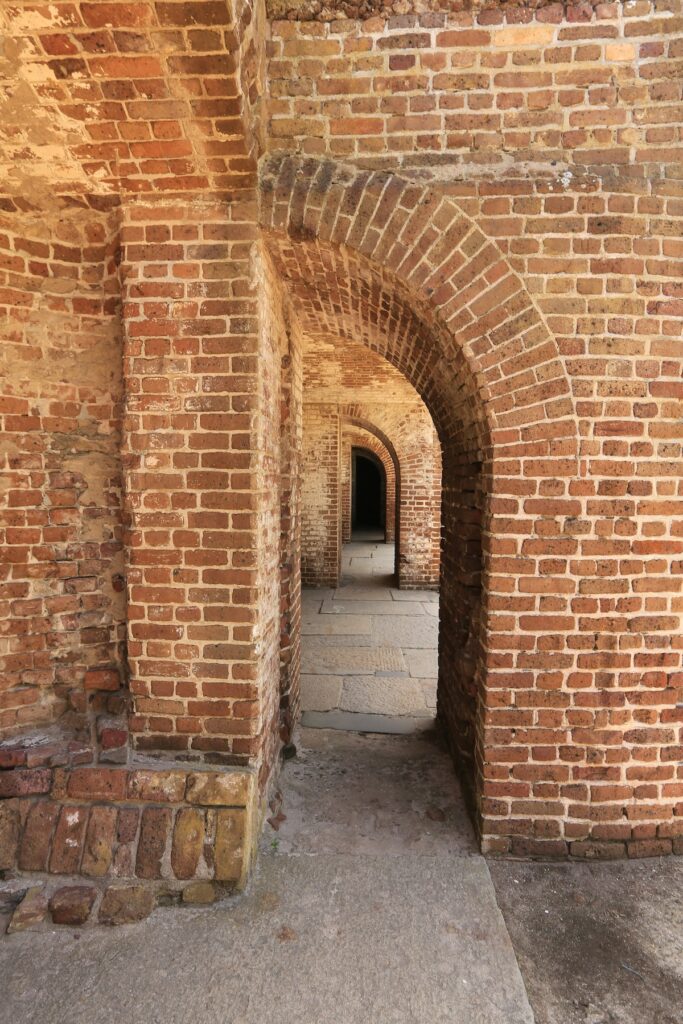
Fort Sumter is one of the most well-known historic sites in Charleston, especially if you’re interested in Civil War history.
This is where the very first shots of the American Civil War began, but something a lot of people don’t realize is that those shots were actually fired at Fort Sumter, not from it. Over 4,000 rounds were fired during the battle, marking the start of one of the most pivotal moments in American history.
Because the fort sits out in Charleston Harbor, getting there is part of the experience. You’ll take a boat out, which I always think is such a fun way to see the city from a different perspective. Once you arrive, there’s a short ranger talk and then you’re free to explore on your own.
I always tell people you will LOVE this if you’re really into history. It’s one of those places where the significance really sinks in when you’re standing there.
That said, it is a bit of a time commitment with the ferry, so if you’re only in Charleston for a quick trip, it might not be at the top of your list. I usually recommend it for longer stays or for anyone who specifically wants to dive deeper into the history.
Personally, I love the boat ride just as much as the fort itself. Being out on the water with views of the Charleston skyline is such a cool way to experience the city.
✅ Grab tickets in advance through the only authorized tour company or check availability here:
2. Middleton Place
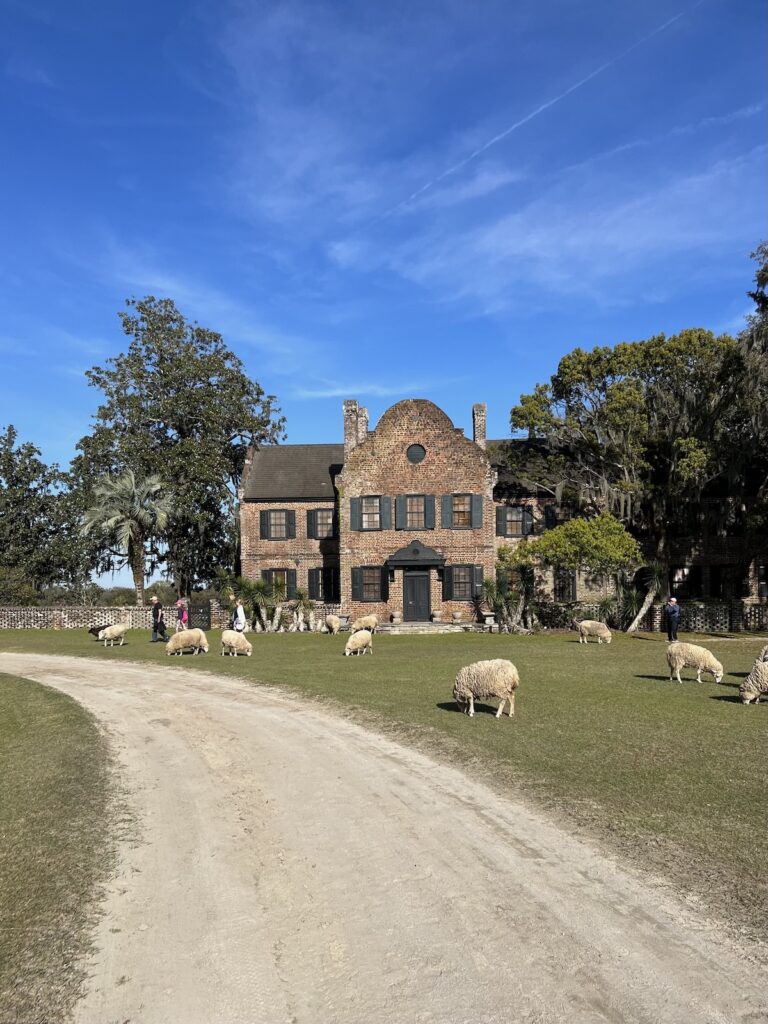
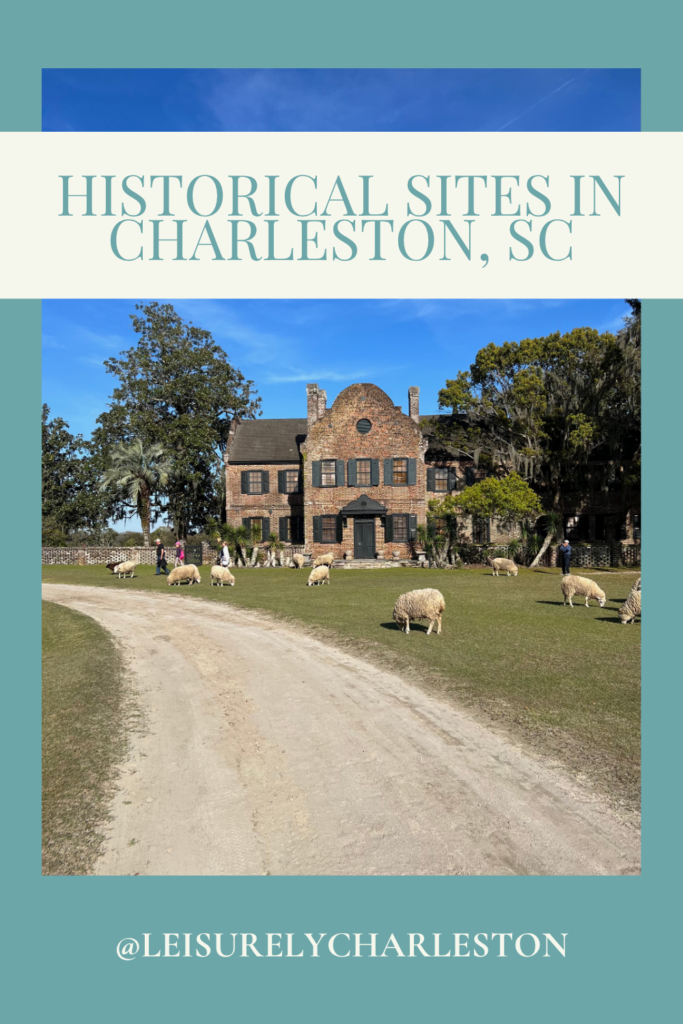
Middleton Place is one of those places that’s both beautiful and deeply meaningful. It is one of my personal favorite attractions in Charleston. I recommend taking this tour that offers hotel pickup and drop off!
This former plantation dates back to the 18th century and is home to America’s oldest landscaped gardens. It was once owned by the Middleton family and Arthur Middleton (who is a signer of the Declaration of Independence) was born here. It’s also an important site for understanding the full history of Charleston, including the lives of the enslaved people who lived and worked on the property. They do a really good job telling the full story.
What’s also important to understand here is how central rice cultivation was to this region. And, it was completely built on slave labor. The economy was built in large part on rice plantations like this one along the rivers and Charleston became one of the wealthiest ports in the colonies because of it. The famous “Carolina Gold” rice was a major export that shaped both the landscape and the history of the area in a really lasting way.
Besides the history, the gardens are the highlight. Think reflecting ponds, grand oaks, and wide, open green spaces that feel incredibly peaceful.
I love coming here when I want to slow down a bit. It’s a nice contrast to the busier parts of Charleston.
Plan for a couple of hours and wear comfortable shoes. I always recommend taking time to visit the house museum which is worth the additional fee because it adds so much context to the experience. You will also see ruins of two other homes that were burnt to the ground by Sherman’s army during the war.
If you enjoy history but want something a little more relaxed and scenic, this is absolutely worth it and for sure my favorite plantation in Charleston!
3. Magnolia Plantation and Gardens
Magnolia Plantation and Gardens is one of the most well-known historic sites in Charleston and it has a very different feel from some of the others.
Founded in the 1670s, it’s one of the oldest plantations in the South and has survived everything from the American Civil War to natural disasters. Today, it’s best known for its romantic-style gardens, which are designed to feel more natural and less structured than places like Middleton Place.
You’ll find winding paths, wooden bridges, marsh views, and seasonal blooms that change throughout the year. Pro tip it’s especially beautiful in the spring when the azaleas bloom!
This is one I recommend if you want history, but also something really scenic and easy to explore. It feels a bit more casual and less formal, which makes it great if you have kids in tow. Plus there are fun family friendly activities here so it’s my favorite if you’ve got kids.
There’s a lot to see, so I’d plan for at least a couple of hours. They also offer a nature tram and boat tour through the wetlands, which can be a fun way to experience a different side of the property (and keep little ones engaged). You might spot alligators!
It’s also right next to Middleton Place, so you can easily pair the two in one day if you want to explore a bit deeper.
Personally, I love how peaceful it feels. It’s a spot where you can take your time, wander, and just enjoy being outside while still taking in the history!
4. Boone Hall

Boone Hall is one of the most recognizable historic sites in the Charleston area. And if you’ve seen photos of that long driveway lined with oak trees, this is it.
Founded in 1681, it’s one of America’s oldest working plantations. It’s incredibly iconic visually, but it also plays an important role in telling the history of Charleston, including the lives of the enslaved people who lived on the property. The preserved slave cabins and exhibits are a really powerful part of the experience.
The main house is open for tours too, but it’s not the original and therefor not that historic. However, if its hot out, I would do the tour just to cool off!
It’s also a fun stop for movie fans. Parts of The Notebook were filmed here. The exterior of the main house was used as Allie’s summer home, and the front gate is the one Noah runs into (which was actually an accident and not part of the script).
This is one of the easier plantations to visit, especially if it’s your first time in Charleston. There’s a mix of history, visuals, and guided experiences, so it’s easy to follow and take in
I always tell people not to skip the slave cabins. They’re one of the most impactful parts of visiting and add so much depth. You should also definitely catch the Gullah performances here.
Personally, I think this is worth it if you want something iconic and easy to visit, especially if you’re staying nearby in Mount Pleasant.
👉 Get tickets for Boone Hall in advance here!
5. USS Yorktown at Patriots Point

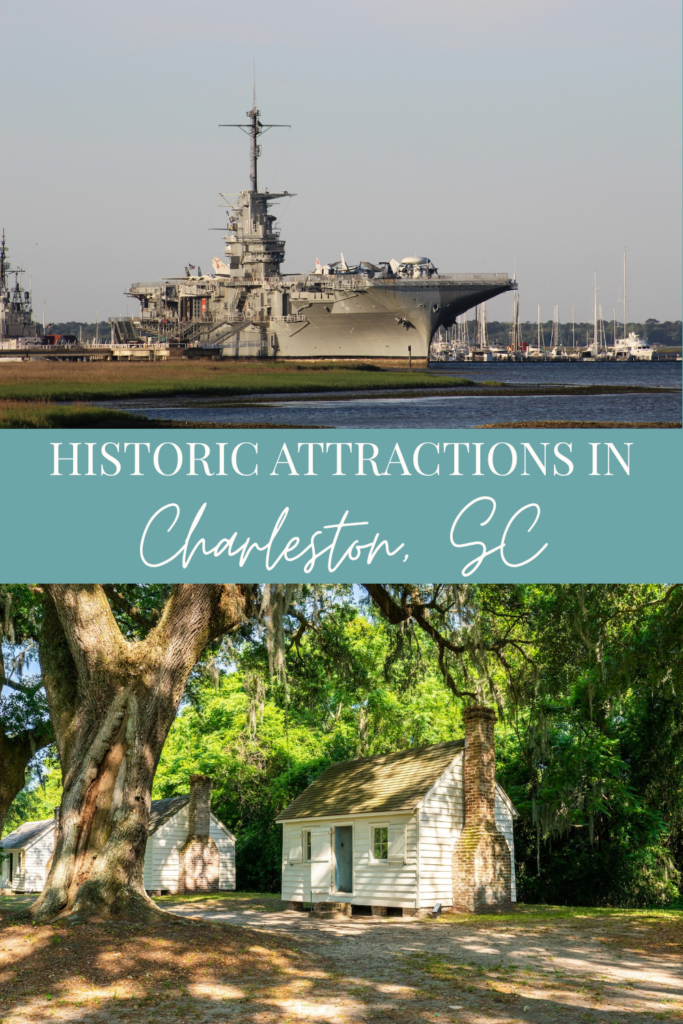
The USS Yorktown is one of the most unique historic sites in the Charleston area because you’re not just learning history, you’re walking through it as you explore the ship!
This massive aircraft carrier served in both World War II and the Vietnam War before being decommissioned and turned into a museum. Today, it sits right on Charleston Harbor at Patriots Point and it’s part of the larger Patriots Point Naval & Maritime Museum.
You can explore multiple levels of the ship, walk through hangars filled with aircraft, and get a real sense of what life at sea would have been like for thousands of sailors. You get to see where the slept, what the kitchen was like and there are cool simulators that kids LOVE!
This is such a great stop if you want something interactive. It’s one of those historic experiences that keeps both adults and kids engaged the whole time.
Plan a couple of hours here, especially if you want to explore everything. It can feel like a maze in the best way, so give yourself time to wander.
I also love the views back toward downtown Charleston from the ship. It’s one of the best vantage points in the city and really puts the harbor in perspective.
My only warning is that the ship is obviously not air conditioned and it gets pretty warm inside during July/August!
6. Fort Moultrie
Fort Moultrie is one of the most quietly powerful historic sites in Charleston and I think it often gets overlooked.
This fort has been rebuilt and used across multiple major conflicts in American history from the Revolutionary War through World War II. One of its most famous moments came during the Battle of Sullivan’s Island in 1776, when the original palmetto-log fort held off a British naval attack. That victory became an early symbol of resistance in the American Revolution.
Because of its long history, you really feel the layers of time here in a different way than some of the more polished historic sites in Charleston.
I love pairing this with a beach day on Sullivan’s Island. It’s easy to visit, low-key, and never feels crowded the way some of the more well-known sites can.
Give yourself about an hour here unless you’re really diving into every exhibit. It’s very self-guided, so you can move at your own pace.
What I personally enjoy most is the setting. You get history, but also ocean air, marsh views, and that slower rhythm that Sullivan’s Island is known for. Definitely grab lunch on the island afterwards!
7. The Battery & White Point Gardens


The Battery and White Point Gardens are two of the most iconic spots in Charleston and one of the easiest ways to feel the city’s history just by walking around. This area was part of the original walled city of Charles Towne so it’s one of the oldest areas.
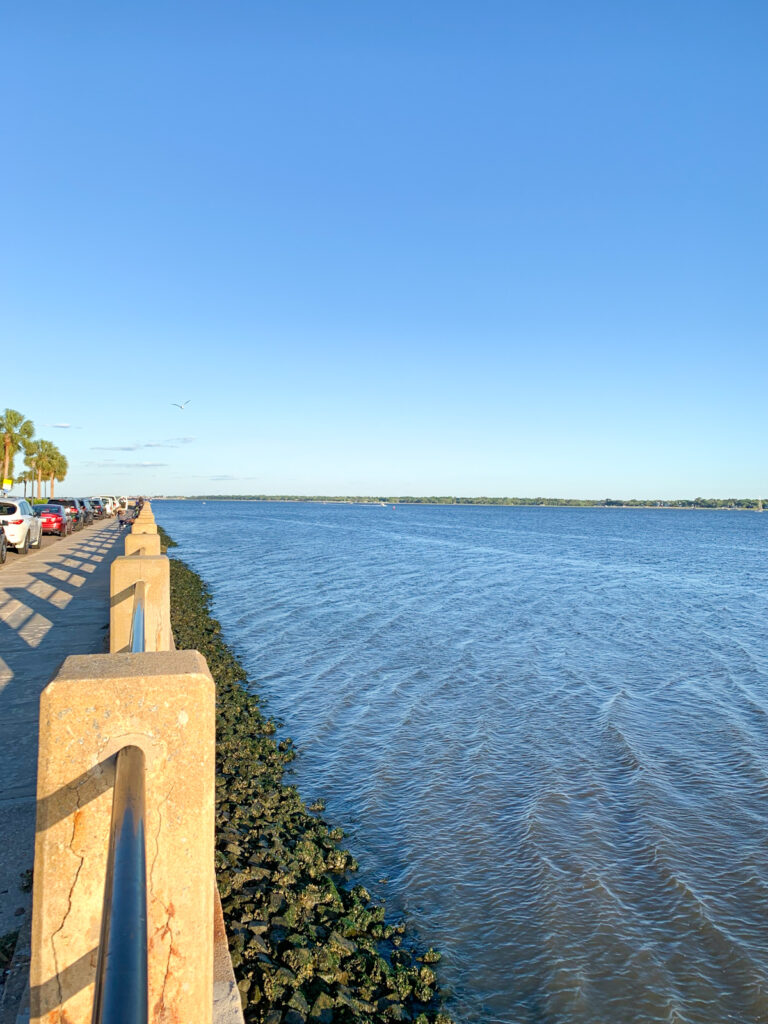
The Battery is a historic seawall lined with grand antebellum homes overlooking the harbor. Right at the southern tip, you’ll find White Point Gardens, a waterfront park that has served many roles over time, including coastal defense during the Civil War.
Before that, this area also has early colonial history tied to Charleston’s port and the bustling maritime trade that brought in sailors, merchants and yes, pirates. In the late 1600s and early 1700s, Charleston Harbor was part of the same busy shipping routes that infamous pirates like Blackbeard once navigated, and the coastline around here has plenty of stories tied to that era.
Today, it’s a peaceful public space filled with oak trees, statues, and sweeping views of Charleston Harbor and passing boats.
This is one of my favorite places to simply walk. It’s beautiful at any time of day, but especially in the morning or just before sunset when the light hits the water.
I always suggest pairing this with a stroll through the surrounding streets. Some of the most beautiful Charleston historic buildings are right here and it’s one of the best ways to experience the charm of the historic district without an itinerary.
You don’t need much time here. Just wander, take it in, and slow down for a bit! It’s one of those places where the history and everyday life in Charleston really blend together in a meaningful way.
8. Old Exchange and Provost Dungeon
The Old Exchange and Provost Dungeon is one of the most fascinating historic sites in Charleston and it has a bit of everything: colonial history, Revolution-era stories, and a darker side of the city’s past. President George Washington even spent time here during his southern tour!
Built in the late 1700s, it originally served as Charleston’s customs house and one of the most important public buildings in the colony. It’s where goods were taxed, business was conducted, and major civic events took place including a stop during George Washington’s 1791 visit to Charleston.
Beneath it, the Provost Dungeon was used as a holding space for prisoners during the Revolutionary War and later periods, which gives the whole site a more dramatic, layered feel.
This is a really fun stop, especially if you have kids in tow. The guided tours are engaging, and the dungeon adds just the right amount of “spooky history” to keep everyone interested without feeling overwhelming.
I like to recommend this as an easy add-on while you’re walking through the historic district since it doesn’t take a huge time commitment.
✅ This ghost tour includes entry to the dungeon at night!
9. Nathaniel Russel House
The Nathaniel Russell House is my favorite house museum to tour in Charleston.
This home was built in the early 1800s and is one of the most important examples of Federal-style architecture in the country. It was originally owned by wealthy merchant Nathaniel Russell, and what makes it so special today is how meticulously it has been restored to reflect what life would have looked like during that time.
The moment you walk inside, you’re greeted by that incredible free-flying, three-story cantilevered staircase and it’s honestly the highlight of the entire house for me. It feels almost sculptural as you look up through the space.
This is one of those Charleston historic sites I never get tired of recommending. The guided tour is really well done and it gives you a clear sense of both the elegance and complexity of life in that era.
What I personally love most is how immersive it feels. It’s not just a look at history. It feels like stepping directly into it, with so many original details carefully preserved and restored.
If you enjoy architecture or design at all, this is absolutely a must-see while you’re exploring historic Charleston.
10. Aiken Rhett House
On the other hand, the Aiken-Rhett House is one of the most unique historic homes in Charleston because it hasn’t been fully restored.
Built in the early 1800s, it was once the home of Governor William Aiken Jr. What you see today is a preserved snapshot of the house in its later life, not a recreated version of it. There’s no staged furniture or heavy restoration, so you’re really seeing the home as it was left.
You can walk through the rooms, courtyard, and outbuildings, including the spaces where enslaved people lived and worked, which are still intact and thoughtfully interpreted.
This is a Charleston historic site that feels a bit more raw and reflective. It’s not “pretty” in the traditional sense, but it’s incredibly meaningful.
They also offer an audio tour, which I love because you can move through the property at your own pace and really take in the details without feeling rushed.
I always recommend pairing this with the Nathaniel Russell House if you have time because you get two completely different approaches to preservation, and it really deepens your understanding of historic Charleston!
11. Drayton Hall
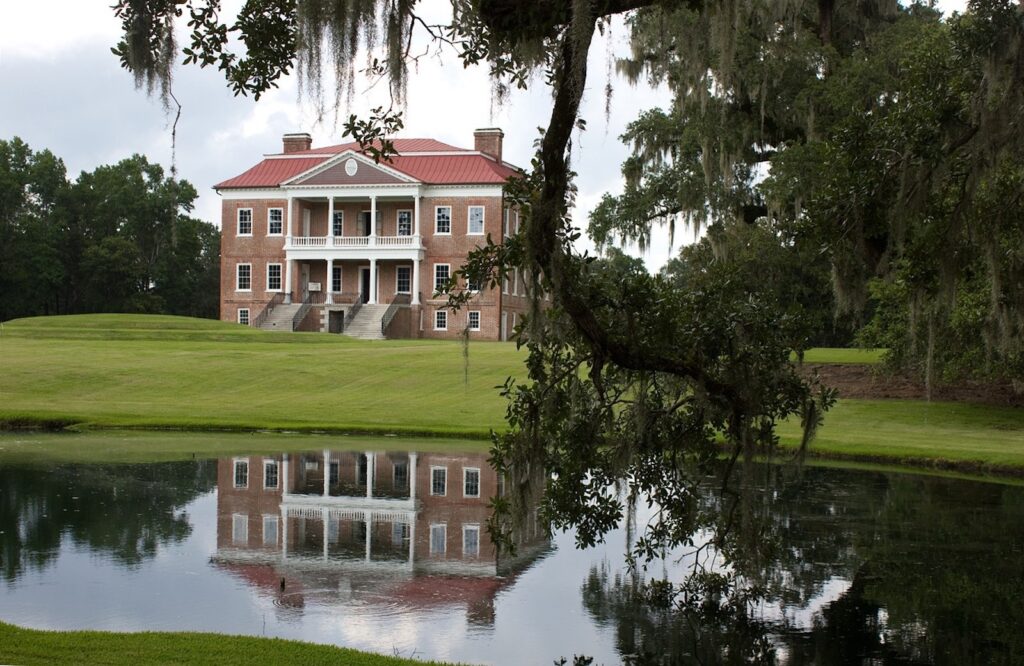
Drayton Hall is one of the most remarkable historic sites in Charleston because it has survived nearly untouched for centuries.
Built in the 1730s, it’s one of the oldest preserved plantation houses in America and unlike many others, it was never modernized or fully restored. There’s no electricity inside the main house, and no recreated interiors, which gives it an incredibly authentic, almost time-capsule feel.
It’s also one of the best surviving examples of Georgian Palladian architecture in the United States, and it’s one of the few plantation houses along the Ashley River to survive the American Civil War largely intact.
This is one of my favorite stops if you want something a little quieter and more reflective. It feels less crowded and more contemplative than some of the other historic sites.
The guided tour is really important here because you get so much more context about what you’re seeing, especially since the house is intentionally left unfurnished. This one can be a quicker visit and you don’t need a ton of time here so it’s easy to pair with Magnolia Plantation.
12. Rainbow Row

Rainbow Row is one of the most photographed spots in Charleston and it’s just as charming in person as you’d hope.
This row of pastel-colored historic homes dates back to the 18th century and sits along East Bay Street near the waterfront. The homes were restored in the early 20th century, and the iconic colors were chosen as part of that restoration. Today, it’s one of the most recognizable stretches of historic Charleston, even though it’s privately owned and still very much a lived-in residential street.
This is more of a quick stop than an activity, but it’s absolutely worth seeing while you’re exploring the historic district for a representation of the historic architecture.
I always suggest walking it early in the morning or later in the afternoon when it’s a little quieter and the light is beautiful. It’s also a great area to wander from as you explore nearby Charleston historic buildings and waterfront streets.
13. Charleston City Market
This is one of the more touristy sites to see in Charleston, SC, but I want to mention it because many people get the history completely wrong. Many people think that enslaved people were sold here, but they were not. If you want that history, read onto my next place on the list below.
The site dates back to the early 1800s and was historically a major public marketplace for the city. Today, it’s filled with local vendors, sweetgrass baskets, and souvenirs, but its roots are tied to Charleston’s long trading history and the daily life of the city over time.
I always tell people this is a quick walk-through rather than a must-do activity, but it’s worth seeing because you’ll naturally pass it while exploring downtown.
Personally, I like it most for the sweetgrass basket weavers outside especially if you’d like to buy one as a souvenir. That’s where you really feel the connection to Charleston’s Gullah Geechee culture and craftsmanship.
14. Old Slave Mart Museum
The Old Slave Mart Museum is one of the most powerful historic sites in Charleston, and it’s not an easy visit.
This building was once part of a larger network of sites where enslaved people were imprisoned and sold in the 19th century. Today, it’s a museum dedicated to telling that history honestly, with exhibits that focus on the lived experiences of enslaved Africans in Charleston and the broader domestic slave trade.
This is one of those places I always suggest thinking about before you go. It can be emotionally heavy and it’s not a casual stop.
If you do visit, I recommend giving yourself time afterward to process everything. Don’t try to rush it or squeeze it between other activities.
I personally think it’s an important site, but it’s not for everyone depending on where you are in your trip or how much heavy history you want to take on in a single day.
15. International African American Museum
The International African American Museum is the newest museum in Charleston, but it tells one of the most important stories in the city and in American history.
Located on the former Gadsden’s Wharf site, this is one of the most significant entry points for enslaved Africans brought to the United States. The museum doesn’t just focus on Charleston’s role in that history, but connects it to the wider African diaspora and the long, ongoing story of resilience, culture, and identity.
The design itself is also meaningful, especially the memorial garden overlooking the water. It’s intentionally reflective and quiet, giving you space to take everything in.
This is not a quick stop. You really want to give yourself time here. I spent at least two hours reading through all of the exhibits. There is a ton of information here and they did an outstanding job with the museum. I always suggest going when you’re not rushed, because there’s a lot to absorb emotionally and intellectually.
16. The Charleston Museum
The Charleston Museum is actually the first museum in America and it’s one of the top points of interest in Charleston SC. It’s a great stop if you want to understand the city beyond just what you see on the streets.
It was founded in 1773 and has been collecting and preserving artifacts from Charleston’s long history ever since. The exhibits cover everything from early colonial life to the Civil War, decorative arts, natural history, and even local archaeology. It really helps connect the dots between all the historic sites you’re seeing around the city.
This is an easy add if you want a deeper overview of historic Charleston without committing to multiple house tours.
I usually recommend it as a good “anchor” stop early in a trip, especially if you’re trying to orient yourself before exploring the historic district.
Personally, I like it because it gives you context for everything else you’re about to see. It makes walking through Charleston feel more meaningful when you start recognizing names, families, and stories across different sites.
This is a great option especially if you’re in Charleston when it is raining or if it’s hot in the summer!
17. McLeod Plantation
McLeod Plantation is one of the most important historical sites to visit in the Charleston area and it offers a very different perspective than many of the more polished plantation properties.
This site is unique because it focuses heavily on the lives of the enslaved people who lived and worked here. The original plantation house still stands, along with the preserved slave cabins, which helps tell a more complete and honest story of plantation life in the Lowcountry.
I always recommend going into this with time and intention. It’s not a “pretty gardens” kind of visit at all. It’s focused on history and storytelling and it’s very well done.
The guided experience is really important here, so I wouldn’t rush through it. Give yourself space to walk the grounds slowly and take in what you’re learning.
McLeod brings forward voices and stories that are often overlooked and it stays with you long after you leave.
18. Charles Towne Landing
I couldn’t finish this post without mentioning Charles Towne Landing in West Ashley because this is where it all began in 1670!
This is the original settlement of Charles Towne, founded in 1670, making it one of the most important historic sites in the Charleston area. It’s where English settlers first landed before the city moved to its current peninsula location.
What I love about this spot is how interactive it is. There’s a small zoo featuring animals that would have been native to the area at the time, including bison, and a really cool replica ship that you can walk onto (and it’s kind of wild to see how small it is when you think about crossing the ocean in it).
This is such a great one if you want something a little more active. You can rent bikes and explore the grounds, which makes it feel more like an experience than just a historic stop.
There’s also an indoor museum you can add on for an additional fee, which gives more context to the site.
Personally, I think this is a really fun and educational stop especially if you have kids or just want something a little different from the typical house museum.
The Wrap Up: Top Historic Sites in Charleston, SC
Charleston has gained a lot of notoriety for its cuisine, shopping, and overall charm. But at its core, tourism here really started because of its history and how well the city has preserved it.
That’s what makes exploring these sites so meaningful. From waterfront forts to tucked-away house museums and sprawling plantations, these Charleston historic sites are what truly shape the city’s identity. Some are easy, scenic walks, others are heavier and more reflective, but together they help you understand the full story of the Lowcountry.
If you’re planning your own visit, I always encourage people to slow down and choose a mix that feels right for them. The best historic things to do in Charleston aren’t about checking everything off a list. They’re about connection, context, and perspective.
At the end of the day, these are the Charleston top attractions that give the city its depth, not just its beauty. And when you’re deciding on places to visit in Charleston, the history is really what turns a pretty trip into a memorable one!
FAQ
What is Charleston famous for historically?
Charleston is best known historically for its role in the Civil War, its early founding, and how well its history has been preserved.
It’s widely recognized as the place where the American Civil War began, with the first shots fired at Fort Sumter. That moment alone makes it one of the most significant cities in American history.
Beyond that, Charleston is one of the oldest cities in the United States, founded in 1670 as Charles Towne. What really sets it apart though is how much of that history is still intact. The city is filled with well-preserved colonial architecture, historic homes, and landmarks that give you a real sense of what life looked like centuries ago.
It’s a city where you don’t just learn the history, but you experience it just by walking around which is why people love it so much!
What is the most historic part of Charleston?
The most historic part of Charleston is the downtown peninsula, especially the Historic District around The Battery and White Point Garden. This area was part of the original walled city and is home to many of the city’s oldest buildings, cobblestone streets, and key landmarks, all within easy walking distance.
Save it for later!